
In this op-ed published in An-Nahar (Beirut) in September 2026, Dr Mahdi Mansour reads Lebanon's results in the OECD's PISA 2025 assessment beyond the headline rankings.
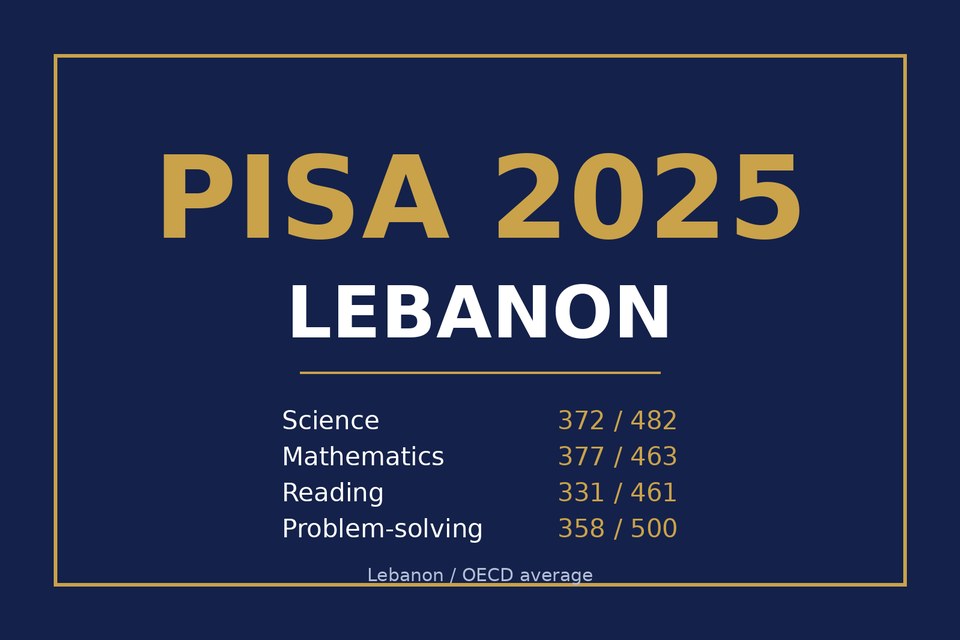
PISA does not simply ask 15-year-olds what they memorised from their textbooks; in 2025, with science as its main domain, it tested their ability to explain phenomena scientifically, read evidence, evaluate information and use knowledge in unfamiliar situations, alongside reading, mathematics and computational problem-solving. Lebanese students averaged 372 points in science against an OECD average of 482, 377 in mathematics against 463, 331 in reading against 461, and 358 in computational problem-solving against 500. About two thirds of students fall below Level 2 in science, the threshold PISA considers the minimum for functional scientific literacy.
The article argues that the real question is not Lebanon's place in an international table, but what students can do with what they know — and how many more years a generation will be moved from grade to grade before we make sure that learning has actually happened.
Read the full article (in Arabic) in An-Nahar.


